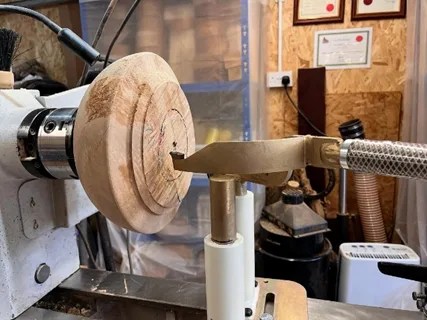
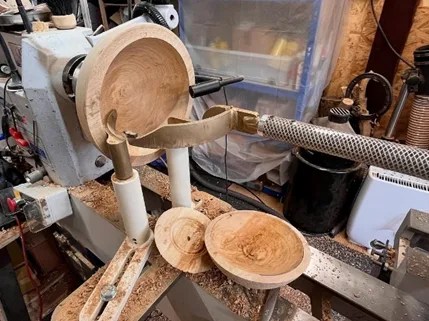
Lessons have continued apace, and there have been some upgrades to machinery, include a more substantial pillar drill, and a proper hollowing rig, with a laser setup, as well as a more substantial coring system. All of this means I can work more efficiently with bigger and more unwieldy pieces of timber and so make much better use of the lathe’s capability. The coring system also means that, when using a large piece of wood to make a bowl, you get to keep more of the wood to make, rather than turning it away. It’s more efficient, and much less wasteful.
In October the Worshipful Company of Turners hosted Wizardry in Wood, a celebration of woodturning that takes place in London every four years. The last Wizardry took place in 2021, the same year I started turning (so I knew nothing, really), and I remember thinking that the work on display was incredible. Four years later I know a little more, and so the skill on show is actually more impressive, because now I have some idea of how much you have to learn and practice to be able to make some of the things on display.


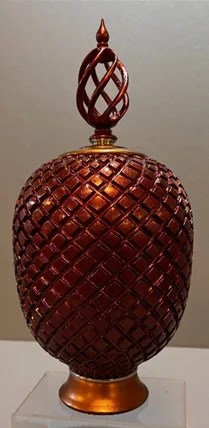

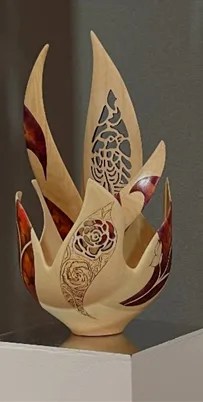
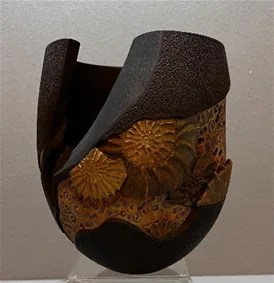
As well as having exhibits from well-known turners, Wizardry also features eleven competition categories. I entered two pieces into the Members competition, a scorched oak vessel that had been turned while wet, and an oak burr.


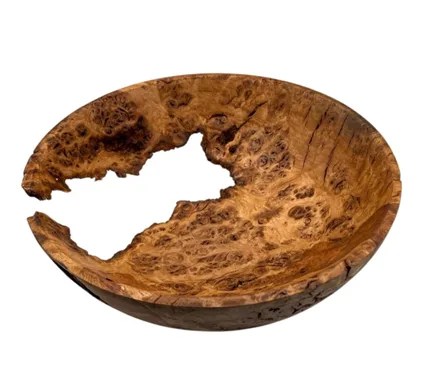
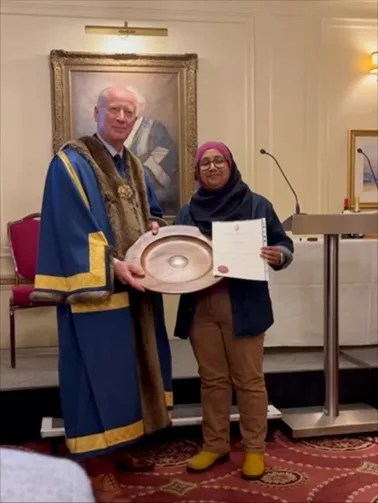
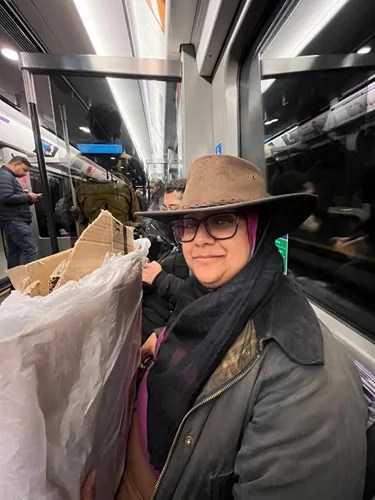
And I was very pleased to learn that the burr was awarded first prize in that category. The award is the Bert Marsh plate, which is a piece of elm burr turned by Ray Key, a master turner, and which I had great fun taking home by Tube on a Friday afternoon.
Leave a Reply